Mycoplasma Detection Kit( PCR-Fluorescence Probing)
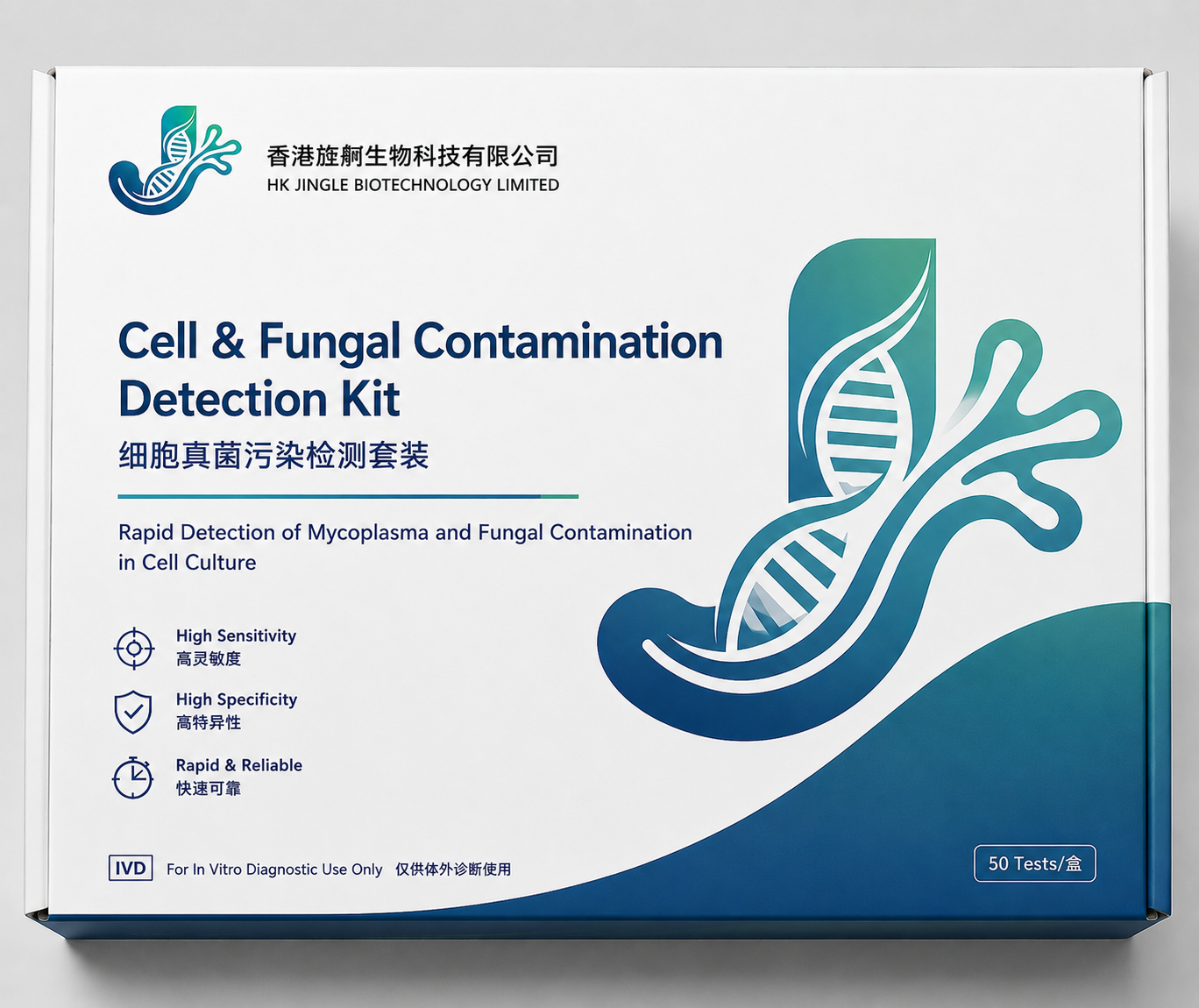
Mycoplasma Detection Kit( PCR-Fluorescence Probing) is a high-precision nucleic acid detection reagent developed based on TaqMan fluorescent probe technology, specifically designed for rapid and accurate qualitative detection of mycoplasma.
The kit relies on a real-time fluorescent quantitative PCR platform, amplifying conserved gene fragments of mycoplasma through specific primers and probes, combined with real-time fluorescent signal monitoring technology to efficiently identify mycoplasma contamination in samples, effectively avoiding the pain points of traditional culture methods such as long time consumption, low sensitivity, and high missed detection rates.
Detection Principle
This kit uses real-time fluorescent quantitative PCR-probe method core technology, designing specific primers and fluorescent probes for the highly conserved specific gene regions of mycoplasma. The probe specifically binds only to the target gene fragment of mycoplasma with no cross-reactivity.
During PCR amplification, as the target gene fragment continuously replicates, the fluorescent probe is cleaved to release fluorescent signals. The real-time fluorescent quantitative PCR instrument dynamically collects fluorescent signals throughout the process, determining whether mycoplasma nucleic acid exists in the sample through signal intensity changes.
Core Product Advantages
- 1. Ultra-high Sensitivity, Eliminating Trace Missed Detection:Detection sensitivity can reach 1-10 copies/μL, capable of accurately capturing extremely trace amounts of mycoplasma nucleic acid in samples. Can detect hidden and mild mycoplasma contamination in advance, perfectly matching high-standard quality control needs for long-term cell culture and high-end biological products.
- 2. Extremely Strong Specificity, Accurate and Reliable Results:Exclusive primers and probes target conserved genes of mycoplasma, validated through bioinformatics big data comparison. Only specifically recognizes mycoplasma nucleic acid with no cross-reactivity with chlamydia, bacteria, viruses, human genomes, and common culture impurities.
- 3. Efficient and Fast Detection, Significantly Shortening Cycle:Uses one-step amplification system without separate reverse transcription or complex preparation steps. Sample processing + amplification detection takes only 1-1.5 hours, compared to 3-7 days for traditional mycoplasma culture methods, improving efficiency by dozens of times.
- 4. Simple Operation, Wide Compatibility:The kit uses a premixed system with standardized reagent ratios. No complex manual preparation needed, just add sample nucleic acid to run. Significantly simplifies experimental procedures and reduces manual operation errors and laboratory contamination risks. Compatible with ABI, Roche, Agilent, Bio-Rad, and other mainstream real-time fluorescent quantitative PCR instruments.
- 5. Strong Anti-interference Ability, Suitable for Diverse Sample Scenarios:Optimized reaction buffer system can effectively resist interference from impurities in cell culture media, serum, biological product stock solutions, and other samples. Tolerates complex sample matrices with strong detection stability and excellent reproducibility.
- 6. Compliant Standardization, Matching Industry Quality Control:Product development and production strictly follow quality systems and pharmacopoeia-related testing specifications. Batch stability is unified with complete quality control systems (positive control, negative control, internal control). Detection data is traceable, meeting compliance requirements for research conclusions, biological product release, and cell therapy product quality control.
Product Specifications and Components
1. Product Catalog No.
JLP5001
2. Specifications
Standard packaging options: 25, 50, and 100 reactions per kit; suitable for both routine small-scale testing and high-throughput screening in the laboratory.
3. Standard Kit Components
- Fluorescent PCR Premix: Contains Taq polymerase, dNTPs, buffer, specific primers/probes, and an internal control system; ready-to-use formulation
- Mycoplasma Positive Control: Standardized mycoplasma nucleic acid template for verifying amplification system efficacy
- Negative Control: Nuclease-free water to rule out interference from reagents or environmental contamination
- Internal Control Template: Monitors the entire experimental process to ensure result validity
- Instruction Manual: Standardized operating procedures, parameter settings, and result interpretation criteria
Applicable Detection Samples and Scenarios
1. Applicable Sample Types
Can comprehensively detect mycoplasma contamination in cell culture supernatant, cell suspensions, master cell banks, working cell banks, virus seed batches, biological product stock solutions, culture media stock solutions, cell therapy preparation intermediates and finished products, and other various samples.
2. Core Application Scenarios
- Research Field: Daily mycoplasma contamination routine screening in cell biology and molecular biology experiments to ensure experimental data accuracy
- Biopharmaceuticals: Mycoplasma quality control and finished product release testing throughout the research and production process of vaccines, antibody drugs, and recombinant protein drugs
- Cell and Gene Therapy: Mycoplasma contamination detection at various stages of stem cell and immune cell preparation to meet industry compliance requirements
- Laboratory Quality Control: Mycoplasma contamination risk screening for cell room environment, culture reagents, and consumables
Standard Operating Procedure
- Sample Processing:Use rapid lysis method to extract sample nucleic acid with simple operation, no complex purification needed, suitable for batch sample processing
- System Preparation:According to instructions, add nucleic acid samples and premix sequentially to PCR reaction tubes, while setting up positive and negative control wells
- Machine Amplification:Place reaction tubes in real-time fluorescent quantitative PCR instrument, set standardized amplification program, and start instrument operation
- Result Interpretation:After amplification, determine sample mycoplasma negative/positive based on fluorescent amplification curves, Ct values combined with internal control results, and issue detection report
Result Interpretation Standards
- Valid Experiment Prerequisite: All internal control wells show normal peaks, negative control shows no amplification, positive control shows normal amplification curves, experimental system is valid
- Positive Result: Sample detection well shows typical S-shaped amplification curve with Ct value less than threshold, determined as mycoplasma positive, indicating sample has mycoplasma contamination
- Negative Result: Sample detection well shows no amplification curve with no Ct value, determined as mycoplasma negative, sample has no mycoplasma contamination
- Invalid Result: Internal control did not peak, regardless of whether sample well amplified, experimental result is invalid and needs retesting
Storage Conditions and Shelf Life
Storage Conditions:Store the kit away from light at -20°C, avoid repeated freeze-thaw cycles. Use low-temperature cold chain during transportation. Some specifications can adapt to short-term room temperature transfer, suitable for multi-scenario logistics needs.
Shelf Life:Unopened and stored away from light in sealed condition, shelf life is 12 months. After opening with proper storage, can be stably used for 3 months.
Precautions:Use nuclease-free consumables throughout the experiment to avoid nucleic acid contamination and ensure detection accuracy.
Product Advantage Summary
This Mycoplasma PCR Fluorescence Detection Kit integrates five core advantages: high sensitivity, high specificity, high efficiency, high compatibility, and high stability, breaking through many drawbacks of traditional detection methods. The standardized premixed system lowers the operation threshold, the built-in internal control system ensures result accuracy, and it widely adapts to various laboratory equipment and sample types. It can comprehensively meet the mycoplasma quality control needs in research experiments, biopharmaceuticals, cell therapy and other fields, and is currently a core reagent for rapid mycoplasma detection with both cost-effectiveness and reliability in the industry.